By David O’Neill
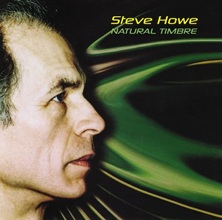 ‘Natural Timbre’ is a 2001 instrumental collaboration between father and son, guitarist Steve and drummer Dylan Howe. This re-release – a companion to the former’s simultaneously re-issued ‘Portraits Of Bob Dylan’ – is a vital reminder of the beauty and creativity found in acoustic instrumentation, breathing new life into an album that originally demonstrated Steve Howe’s remarkable versatility as a guitarist and composer, as the pair create a deeply intimate sonic landscape that forgoes the grandeur of electric prog-rock for a rootsy, organic palette grounded in acoustic guitar, mandolin, banjo, dobro, lap steel, mandocello, and even koto.
What sets ‘Natural Timbre’ apart is its dedication to nuance and refinement. The album’s eighteen tracks, spanning original instrumentals and classical interpretations, unfold as an ever-shifting tapestry of moods and melodic invention. Pieces like ‘Distant Seas’ and ‘Intersection Blues’ showcase Howe’s intricate fingerstyle playing, while ‘Family Tree’ and ‘Curls & Swirls’ offer warm, melodic themes that echo the richness of the Howe musical lineage. The inclusion of syncopated drums by Dylan adds a deft, jazz-inspired pulse to tracks such as ‘J’s Theme’ and ‘Dream River,’ anchoring the gentle virtuosity with subtle rhythmic sophistication.
Having spent some considerable time listening to the album whilst walking my sons’ dog during the cooler days this summer, I can seriously see this becoming a regular listen whilst doing so as it has that autumnal feel to all the compositions and leading into the interpretation of Vivaldis’ Winter as the acoustic setting allows Howe’s compositions to breathe; some standouts include the delicate ‘Winter (Vivaldi)’ and uplifting ‘Solar Winds,’ both demonstrating his interpretative flair for classical forms. One of my personal favourites is ‘Provence’, although ‘Lost for Words’ does almost that too.
The stripped-back approach is rewarding: each note resonates with clarity, and every instrumental timbre feels thoughtful and considered especially on the final three tracks (‘Your Move’, ‘Disillusion’ and ‘To be over’) are instrumental versions of Yes songs.
As Steve Howe himself notes: The idea behind ‘Natural Timbre’ was to show that the beauty of acoustic instruments is universal. I really set about it, putting the electric guitar away wanting to do another kind of exploration, because like the piano, you can’t get away from the tonality of acoustic sound. It’s one of those beautiful, harmonizing, soothing things. With acoustic music, it’s the beauty of the instruments that comes through.
Quod erat demonstrandum.