By George Pirounakis
 One of the biggest mistakes I see at small festivals is the belief that bringing more designs automatically means more sales.
It sounds logical on paper. More options, more chances for people to find something they like, right?
Wrong!
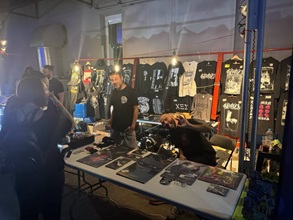
What usually happens is that a band shows up to a festival with ten different shirt designs, three hoodies, two hats, patches, pins, flags and twenty-seven different size combinations. Then they wonder why sales are average and why the merch crew looks like they’re about to commit a crime by the end of the day.
Small festivals are not arenas. They are not online stores. They are not dedicated headline shows where fans have all night to browse your catalogue. People are walking around, watching bands, drinking beer, talking to friends and trying to decide where to spend their money. The average customer wants to make a decision in seconds, not study your merch stand like they’re comparing mortgage plans.
Too many choices create decision fatigue. Customers hesitate. They postpone the purchase. They tell themselves they’ll come back later. Most of them never do.
The second problem is operational. Every extra design means more counting, more stock management, more mistakes, more inventory tracking and more opportunities for sizes to disappear into the wrong pile. The local crew now has to memorize a wall of products that may sell one piece each all day. Instead of focusing on serving customers quickly, they are digging through boxes trying to find the one XL of Design Number 8 that somebody suddenly wants.
Meanwhile the band’s best-selling shirt sells out because the stock was spread across ten mediocre ideas instead of three strong ones.
I’ve seen bands bring thirty products to a festival and leave with twenty-Nine of them. I’ve also seen bands bring three killer designs and absolutely clean house.
The goal is not to impress people with how many designs you own, but to move merchandise.
A small festival merch table should look like a greatest hits album, not your entire discography.
Bring the designs that actually sell. Bring enough units to matter. Make it easy for customers to choose. Make it easy for the crew to work. Make it easy to count. Make it easy to restock. Make it easy to settle.
At the end of the day nobody gets paid for having the most complicated merch stand. They get paid for selling merch. And in most small festival environments, less choice, better products and deeper stock will outperform a giant catalogue of “maybe someone will buy this” every single time.
- © George Pirounakis.
- George Pirounakis is a veteran roadie, merch and tour manager. He is the author of ‘So, What the Actual F*ck Am I Doing Here? Notes From The Road, The Table And Everything Underneath‘ and ‘The Merch Field Manual : How Tour Merchandise Actually Works‘, and the founder of OneTwoSix Hardcore Clothing.